How Can I Check My Content for Policy Violations Before Posting?
You can check your content for policy violations before posting by reviewing your wording, claims, images, copyright, metadata, and platform-specific rules before publishing, or you can just ask VYNDERO to do to it for you and also make it multi-platform-ready content.
To check content for policy violations, review each post before publishing. Compare your wording with the platform’s current community guidelines, copyright rules, advertising standards, and moderation practices.
A practical content compliance review should cover risky wording, unsupported claims, images, music, links, hashtags, captions, and metadata. Also confirm that your content fits the rules of the specific platform where you plan to publish it.
When you check content before posting, you have a better chance of finding problems while they remain easy to fix. VYNDERO can help remove or rewrite risky language into content designed for safer, multi-platform publishing.
Key Takeaways
Check every post against the platform’s latest policies.
Review claims, wording, copyright, metadata, and visual elements.
Look for rules that apply to advertising, health, finance, and sensitive topics.
Keep proof of licenses, permissions, and original ownership.
Use a structured content compliance review before publishing.
How to Check Content for Policy Violations Before Posting
Before publishing, review the platform and content-format rules for your post. TikTok videos, Instagram Reels, YouTube uploads, and paid Facebook ads may follow different standards. Read the current community guidelines, advertising rules, and help pages for your post.
Check rules about harassment, dangerous activities, regulated goods, adult material, misinformation, spam, and advertising disclosures. Pay close attention to context. A joke, product claim, or edited clip may create risk if viewers cannot see its full meaning.

Start with the platform’s community guidelines
Use the official rules as your first review tool. Search for terms linked to your content, including health claims, giveaways, political topics, alcohol, weapons, or paid partnerships. Note rules for captions, images, audio, links, and audience targeting.
Read examples of restricted and removed content when the platform provides them. They can show how moderators interpret threats, insults, false claims, or graphic material. Save the policy version or review date in your project notes because standards can change.
Build a pre-publishing compliance checklist
A repeatable checklist helps you check content before posting. Review every part of the post, not just the main caption. Use the same process for short videos, newsletters, product pages, and paid campaigns.
- Read the caption, script, title, and on-screen text.
- Inspect images, video frames, audio, logos, and background details.
- Test links and verify claims, statistics, prices, and health statements.
- Review hashtags, mentions, calls to action, and audience targeting.
- Confirm sponsorship labels and other advertising disclosures.
- Check for language that could create platform policy violations.
Run the checklist again after each major edit. A compliant draft can become risky when a headline changes, a clip moves, or new text adds a misleading claim. Keep a short record of the review, the rules checked, and the person who approved the post.
| Content area | What to review | Common risk |
|---|---|---|
| Caption and script | Claims, tone, insults, threats, and instructions | Harassment or misleading statements |
| Images and video | People, gestures, scenes, labels, and edits | Graphic, adult, or dangerous material |
| Links and claims | Destinations, prices, evidence, and health language | Scams, false promises, or unsafe advice |
| Hashtags and targeting | Tags, mentions, age settings, and audience choices | Spam or unsuitable distribution |
| Disclosure details | Paid partnerships, affiliate links, and sponsored content | Missing advertising disclosures |
Understand Social Media Policy Violations and Enforcement Risks
Social media policy violations can cause more than a deleted post. A platform may cut your reach, issue a warning, or add an age restriction. These actions can affect how people find and trust your account.
Content moderation may use automated scans, human review, or both. Reviewers may assess your words, images, video, account history, audience, posting pattern, and context. Your intent matters, but it does not guarantee that your post follows platform rules.
Repeated issues may bring temporary feature limits, lost monetization, or account strikes. Severe or ongoing violations can lead to suspension or a permanent ban. Keep records that show legitimate activity, such as original files, licenses, approvals, and relevant messages.

When a platform makes a mistake, use its official appeal process. State the facts, name the specific post, and include useful records. Avoid reposting the same material during review, because repetition may increase enforcement risk.
Use a clear review step before publishing to avoid social media strikes. Check the wording, visuals, claims, links, and audience settings. A calm review can catch problems before automated systems or human reviewers see them.
| Possible action | What it may mean | What you should review |
|---|---|---|
| Reduced distribution | Fewer users may see the post | Claims, hashtags, sensitive terms, and audience fit |
| Warning or content removal | The platform found a possible rule breach | The cited policy and the full post context |
| Age restriction | Only eligible adults may view the content | Sexual themes, violence, language, and visuals |
| Loss of monetization | Ads or creator earnings may be limited | Brand safety, originality, rights, and disclosure |
| Feature limits or account strikes | Posting or account tools may be restricted | Recent violations, repeated conduct, and account history |
| Suspension or permanent ban | Access may be blocked for a set period or forever | Severe conduct, repeated violations, and appeal options |
Use a Content Policy Checker Before You Publish
A careful review can catch problems before a platform does. Use a content policy checker to scan for threats, insults, sexual content, dangerous instructions, regulated products, and misleading claims.
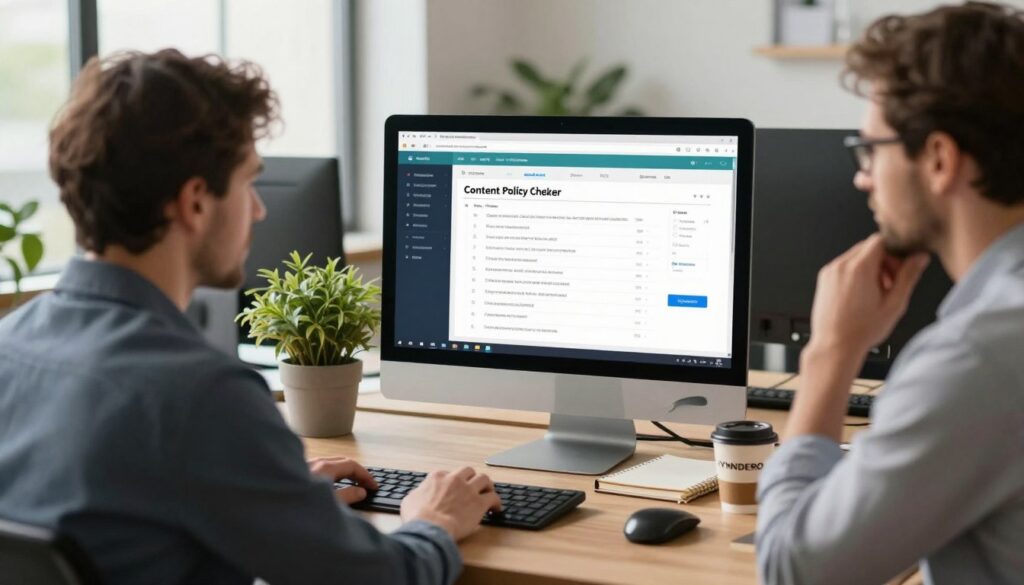
Run text through a structured content review
Review the full post, not just its main paragraph. Check captions, calls to action, links, hashtags, and quoted material. Look for privacy risks, spam patterns, and language that could encourage harm.
- Check whether the wording targets a person or protected group.
- Remove promises that sound certain, extreme, or deceptive.
- Replace unsafe instructions with clear, responsible guidance.
- Confirm that personal details appear only with permission.
Review automated flags instead of accepting them blindly
Automated tools spot patterns, but they can miss context. Read each alert and decide whether the phrase creates a real risk. A harmless quote, warning, or news report may need a short explanation to prevent confusion.
Human review remains vital for content compliance. Check the meaning, tone, audience, and platform rules before approving changes. This step preserves useful information while reducing needless edits.
Use VYNDERO for safer rewrites
VYNDERO can remove or rewrite risky language into clear content for several platforms. It can soften direct insults, clarify health claims, and reduce wording that may invite moderation action.
Keep the original message in view during each rewrite. A safer version should remain accurate and easy to understand. Careful editing can help you avoid content bans and reduce strikes without changing the point.
| Review area | Risk to check | Safer editing step |
|---|---|---|
| Personal attacks | Threats, harassment, or targeted insults | Remove abusive terms and describe the issue without attacking a person |
| Claims and promises | Deceptive results or unsupported health language | Use precise wording and include limits when they matter |
| Safety instructions | Guidance that could encourage harm | State risks clearly and direct readers toward safe choices |
| Privacy | Exposed contact details or sensitive personal data | Delete unnecessary information and confirm permission |
| Spam signals | Repeated calls to action, copied text, or misleading links | Use natural language and keep each promotion relevant |
Identify Risky Wording That Can Trigger Content Moderation
Before you post, read every word as a reviewer might. Look for language that attacks a person, promises too much, or suggests harmful action. A careful edit can reduce risky wording without weakening your main point.
Check threats, harassment, and targeted insults
Remove direct threats, slurs, and insults aimed at a person or protected group. Replace personal attacks with facts about the conduct, product, or public issue. For example, change “You should be punished” to “This conduct may violate the stated rule.”
Avoid calls for mass reporting, public shaming, or unwanted contact. Do not include instructions for harming someone, damaging property, or breaking the law. Describe the concern in neutral terms and invite readers to use the proper reporting channel.
Review claims, health language, and misleading promises
Check health, financial, political, safety, and product claims with care. Words such as “cures,” “guaranteed,” and “risk-free” can create misleading claims when evidence does not support them. Use precise language, such as “may help” or “results vary,” when outcomes depend on the person or situation.
Review jokes and marketing lines under health content policies. A joke about avoiding medical care may still encourage harmful behavior. Claims about weight loss, supplements, diagnosis, or treatment need clear limits and reliable support.
Evaluate sensitive subjects and implied meaning
Content moderation can assess more than the exact words on the screen. Sarcasm, coded terms, emojis, images, and captions may imply violence, hate, fraud, or unsafe conduct. Read the post with its image, headline, hashtag, and comments together.
Ask whether a reasonable reader could mistake the message for approval of harm or discrimination. Replace vague hints with direct, factual wording. Check each revision against the relevant platform rules and health content policies before publishing.
| Risk area | Wording to review | Safer approach |
|---|---|---|
| Threats or harassment | Threats, slurs, insults, or calls to target a person | Describe the conduct and use a formal reporting path |
| Health claims | “Cures,” “guaranteed results,” or advice to stop treatment | Use measured language and state important limits |
| Financial or product claims | Promises of certain profits or risk-free performance | Identify conditions, risks, and limits of the offer |
| Sensitive implications | Coded language, sarcasm, images, or hashtags that suggest harm | Review the full post and state your meaning plainly |
Check for Copyright Violations and Rights Ownership
Check every part of your post, not just the main text. A short clip, image, quote, or song may still create legal risk. Review each asset before publishing to support strong copyright compliance.
Verify images, video, music, and written material
Confirm that you own each asset or have permission to use it. Stock images, screenshots, news footage, illustrations, articles, quotations, and user-generated material may need approval. Public access does not mean an item belongs to the public domain.
Brief use does not prevent copyright violations. Check music licensing for songs, background tracks, sound effects, and live recordings. Review terms for social posts, advertisements, videos, podcasts, and commercial campaigns.
Keep evidence of licenses and permissions
Save the license, receipt, permission email, and source page for every asset. Record the purchase date, approved use, credit rules, territory, duration, and account tied to the license.
Keep original source files, contracts, and attribution details in one folder. This record helps you respond to a claim and supports copyright compliance during later edits or reposts.
Understand fair use limitations
Fair use is a fact-specific legal doctrine, not a blanket exception. Courts may assess the use’s purpose, the work’s type, the amount copied, and its market effect.
No fixed rule makes a certain number of words, seconds, or pixels safe. Commentary, criticism, news reporting, teaching, and research may support a fair use argument, but facts still matter. Review guidance from the U.S. Copyright Office when the answer is unclear.
Audit Metadata, Captions, Hashtags, and Visual Elements
A strong policy check covers more than the main post. Your title, thumbnail, alt text, caption, description, pinned reply, embedded text, tags, mentions, and destination link shape meaning. Include each item in your metadata review.
Even a safe message can gain a misleading or unsafe meaning from surrounding details. Review the full post as viewers will see it before content moderation systems assess it.
Review titles, captions, thumbnails, and descriptions
Read every visible word for accuracy, tone, and context. Check whether the thumbnail suggests graphic material, a false result, or an unsupported claim. Confirm that alt text describes the image without adding sensitive claims.
Inspect embedded text in images, video overlays, and pinned replies. Remove language that could expose private information, target a protected group, or misrepresent a person, product, or event.
Check hashtags, mentions, links, and promotional disclosures
Review hashtags for hidden risks. A harmless post may enter a restricted topic through a hashtag tied to violence, self-harm, illegal activity, or graphic material. Check tags and mentions for unwanted links to people, brands, or movements.
Open each destination link and confirm that it matches the post. Look for tracking pages, unsafe downloads, misleading offers, and sudden redirects. Use clear promotional disclosures for sponsorships, affiliate links, free products, or paid partnerships.
Inspect images and video frames individually
Pause video clips at key moments and inspect each frame. Look for graphic imagery, private details, manipulated media, visible logos, altered documents, or unsafe acts. Check background signs, screens, license plates, and faces for personal information.
Use this review before publishing and after major edits. A short checklist can keep your hashtags, promotional disclosures, and visual details aligned with platform rules.
| Element | What to inspect | Common risk |
|---|---|---|
| Title and caption | Claims, tone, context, and accuracy | Misleading promise or targeted insult |
| Thumbnail and alt text | Visual suggestion and image description | Graphic scene or false impression |
| Hashtags and tags | Topic, associations, and audience signals | Restricted topic or unwanted affiliation |
| Links and mentions | Destination pages, redirects, and privacy exposure | Unsafe page or undisclosed promotion |
| Video frames | Images, logos, documents, and background details | Manipulated media or exposed private data |
Adapt Your Content for Different Platforms and Community Guidelines
Content approved on one service may face limits on another. Each platform sets rules for profanity, political material, medical claims, mature themes, links, and reused media. Review these differences before publishing multi-platform content.
Compare platform policy differences
Read each service’s community guidelines with your content in mind. A post may stay visible on one platform but lose reach, ad access, or visibility elsewhere. These differences can cause platform policy violations and unexpected demonetization.
Pay close attention to commercial disclosures and claims about health, money, or public events. Check how each service handles affiliate links, sponsored posts, graphic scenes, and repeated uploads.
Create platform-specific versions
Do not copy one version across every channel. Prepare separate captions, edits, thumbnails, aspect ratios, disclosures, and calls to action for each audience.
Shorten wording when a platform favors brief posts. Remove risky clips when a service limits mature material. Change reused media, links, or claims when they may breach community guidelines.
Confirm the latest rules before posting
Policies can change without much notice. Check official resources before each campaign: Meta’s Community Standards, YouTube’s Community Guidelines, TikTok’s Community Guidelines, and LinkedIn’s Professional Community Policies.
Save the review date with your publishing records. This step helps spot platform policy violations, reduce demonetization risks, and keep each version ready for its service.
Conclusion
To check content for policy violations, start with the platform’s current rules. Read the full post, including captions, hashtags, links, images, and video frames. Test threats, insults, health claims, and promises that may trigger moderation.
Next, confirm that you own or have permission to use every creative asset. Compare the post with each platform’s requirements, then carefully review automated flags. This process helps you avoid social media strikes and lowers the risk of content bans.
Save licenses, permissions, review notes, and approved versions before publishing. These records support stronger content compliance and make future audits easier. After posting, monitor policy updates and review how the platform handles your content.
VYNDERO can help remove risky wording or rewrite a post into a safer version for multiple platforms. You should still make the final compliance decision and confirm that the finished content fits each platform’s latest standards.
FAQ
How can you check content for policy violations before posting?
What should you include in a content compliance checklist?
What are common social media policy violations?
Can a content policy checker detect every possible risk?
How can you avoid social media strikes and content bans?
What enforcement actions can platforms take?
How should you review threats, harassment, and insulting language?
How do you check claims for misleading or unsafe language?
How can you check for copyright violations before publishing?
Does fair use automatically protect reposted content?
Which metadata and visual elements should you review?
Can hashtags and links create content moderation risks?
Why can content approved on one platform be restricted on another?
Where can you check the latest platform rules?
Can VYNDERO help make content safer to publish?
What should you do if a platform removes compliant content?
What is the final check before you publish?